
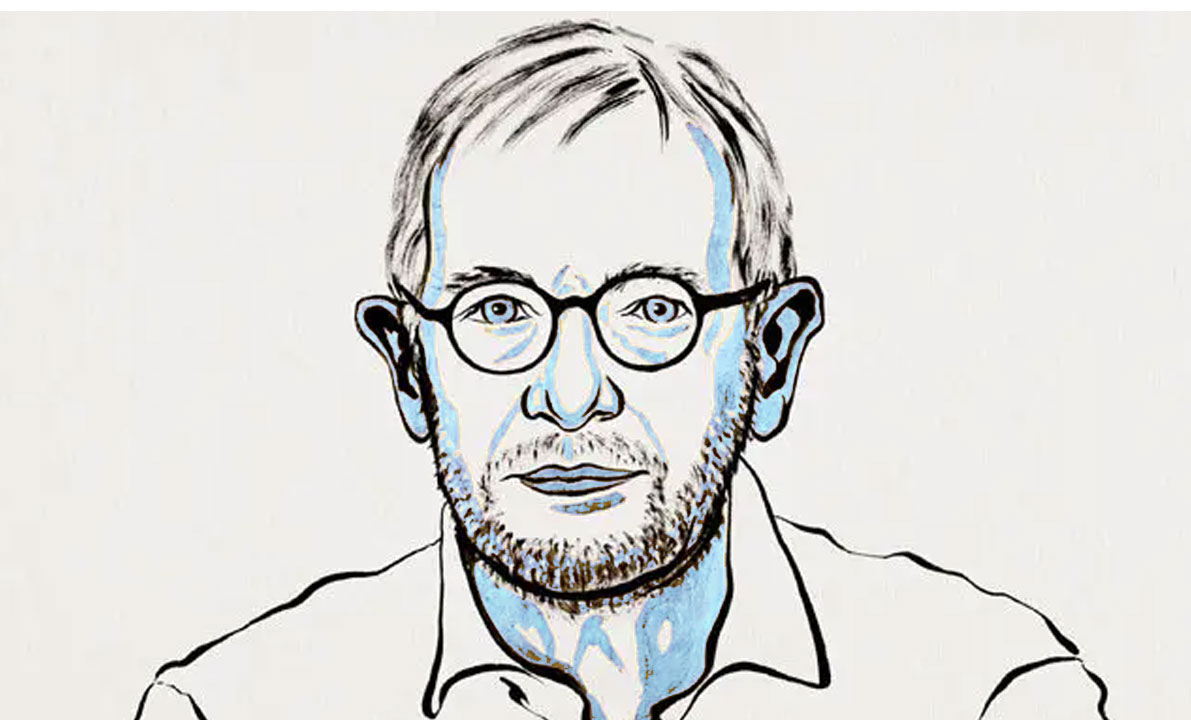
On Tuesday, Belgium's Francis Halzen was awarded the Nobel Prize in Physics for discovering high-energy neutrinos of astrophysical origin.
'The Royal Swedish Academy of Sciences has decided to award the 2026 Nobel Prize in Physics to Francis Halzen "for his decisive contributions to the IceCube Neutrino Observatory and the discovery of high-energy neutrinos of astrophysical origin,'" the Academy announced on its website.
“Francis Halzen has laid the foundations for a whole new branch of astronomy. He had the idea of using glacial ice at the South Pole to capture neutrinos, which are elusive particles. The result of this was the IceCube Neutrino Observatory, which can track neutrinos that originate in distant parts of the cosmos,” it added.
Alfred Nobel mentioned physics first in his 1895 will. At the end of the nineteenth century, many people considered physics to be the most important science, a view that Nobel himself may well have shared. His own research was also closely tied to physics.
The Nobel Prize in Physics is awarded by the Royal Swedish Academy of Sciences, which is based in Stockholm, Sweden.
Financial Mirror/AH