
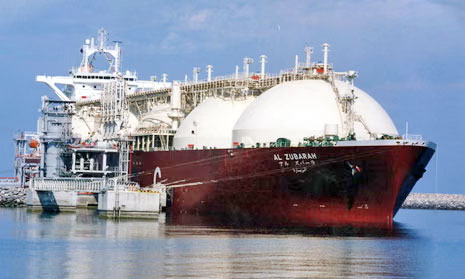
A doubling of Bangladesh’s fuel import bill pushed its trade deficit sharply higher to $3.82b in the first two months of FY27, according to latest data from Bangladesh Bank.
The widening trade gap, combined with a slump in foreign financing, dragged the country’s overall balance of payments into a $694m deficit during July–August, completely overshadowing a robust surge in remittances and piling fresh pressure on external reserves.
Official central bank statistics show that the trade deficit—the gap between export revenue and import expenditure—expanded significantly from $2.96b recorded in the corresponding period of FY26.
Driving this surge was a 100pc year-on-year jump in petroleum imports, which reached $2.49b compared to $1.25b a year prior. Petroleum, oil, and lubricants (POL) accounted for the bulk of this spike, soaring 115.9pc to $2.28b, while crude oil imports rose 11.1pc to $210m.
While the data does not isolate the impact of elevated global energy prices from physical import volumes, the sheer magnitude of the increase made fuel the single largest driver of the rising import burden.
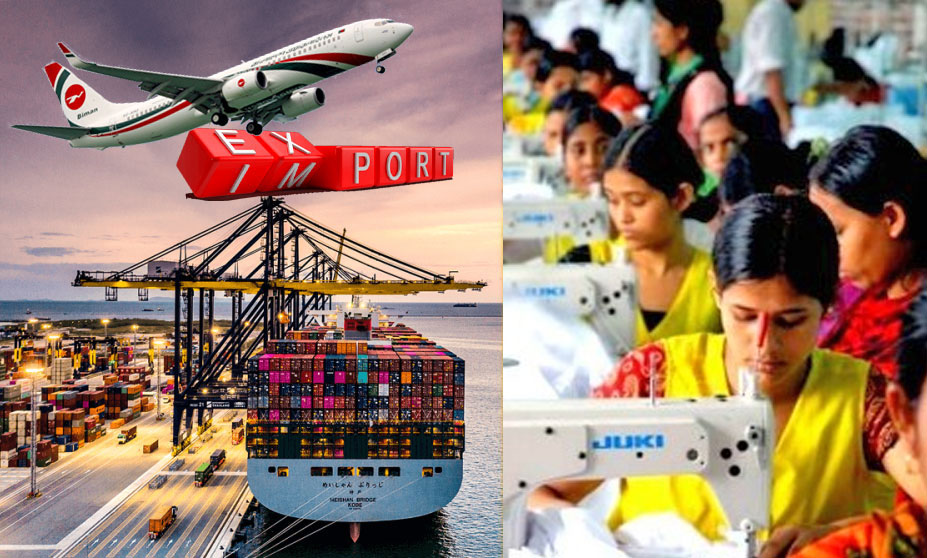
Overall imports on a cost, insurance, and freight (CIF) basis grew 12.2pc—or roughly $1.4b—to $12.90b. Total exports expanded at a milder 5.8pc pace to $8.38b, anchored by a 5.3pc rise in readymade garment shipments to $7.49b. Free-on-board (FOB) imports, meanwhile, went up 12.1pc to $12.20b.
Financial analysts warned that Bangladesh’s foreign exchange allocation is shifting heavily toward short-term fuel and consumer needs at the expense of long-term productive capacity.
Capital goods imports contracted 19.9pc, with capital machinery imports plummeting 32.5pc, reflecting a sharp slowdown in industrial expansion and investment. Conversely, essential consumer imports accelerated, led by steep increases in edible oil (up 61.3pc) and wheat (up 47.4pc).
Despite the trade slippage, the current account managed to post a $599m surplus, improving from $197m a year earlier, thanks to an 18.9pc increase in worker remittances to $5.83b.
However, this current account surplus was quickly undone by a severe drain in the financial account, which plunged to a net outflow of $1.14b from $233m last year amid drying external support.
Net medium- and long-term foreign loan inflows fell 60.9pc to $291m against repayments of $572m, turning net foreign aid flows negative at $281m. Foreign direct investment remained weak at $223m, down from $243m.
As a result, the overall balance of payments flipped to a $694m deficit from a modest $53m deficit a year ago, requiring central bank reserve interventions to bridge the shortfall.
By the end of August, Bangladesh’s gross official foreign exchange reserves stood at $37.35b, which translates to $32.44b under the IMF’s BPM6 accounting standard.
Financial Mirror/AH