
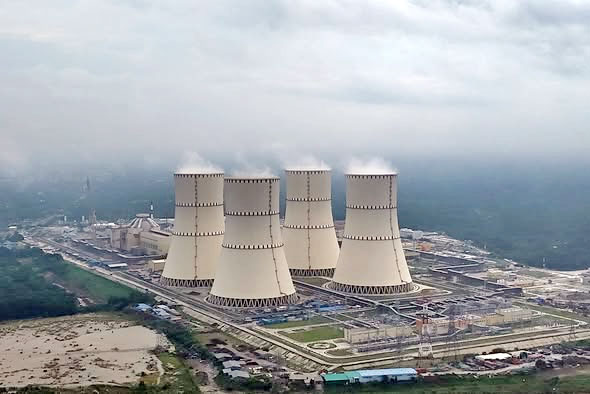
Bangladesh is preparing to switch on its first nuclear power plant, a long-delayed project promising relief from chronic electricity shortages, even as some local residents voice safety concerns about living beside it.
The 2.4-gigawatt Rooppur nuclear plant, a $13-billion megaproject more than a decade in the making, has transformed a once-sleepy village on the banks of the Padma River, 150 kilometres west of Dhaka. Built in partnership with Russian state nuclear corporation Rosatom, the facility has brought thousands of foreign workers, new businesses, and local jobs. Once fully operational, its two reactors are expected to generate over 10pc of electricity demand for the South Asian nation of 170 million people, which has suffered severe power cuts due to global fuel supply disruptions.
State officials consider the complex the realization of a decades-long energy goal. Md Zahedul Hasan, managing director of Nuclear Power Plant Company Bangladesh, stated that the plant’s first reactor is scheduled to start by the end of this year, with the second unit set to become operational within a year. The facility aims to diversify a national grid heavily reliant on natural gas, coal, and oil.
The influx of Russian technicians has created an unusual cultural hub in rural Bangladesh. Residential blocks, markets, and eateries displaying signs in Bangla, English, and Russian have emerged, with local vendors serving borscht alongside native dishes. Alexander Vladimirovich Skvortsov, a Russian installation technician who relocated with his family in 2024, described the project as transformative. Local residents have also benefited economically; Md Emon Khan, 28, left a factory job in Dhaka to return home and sell produce to plant workers.
While project managers emphasize that safety systems incorporate design lessons from past nuclear incidents, opinions among nearby villagers remain divided. Younger locals like 15-year-old Mohammad Nafiz express pride and hope to work at the facility after completing engineering studies. Conversely, older residents such as 80-year-old Md Yunus Ali recall decades of opposition to placing a nuclear plant in a densely populated region, noting recent loud compressor tests that rattled the nearby community.
First envisioned in the 1960s, the Rooppur project saw multiple stalled attempts with international partners before Bangladesh signed a loan agreement with Moscow in 2015 covering 90pc of initial costs. Construction subsequently encountered hurdles from COVID-19 disruptions, Western financial sanctions on Russia affecting equipment deliveries, and political controversies regarding past project oversight.
Despite these challenges, public expectation centers heavily on grid reliability. Local farmers like 55-year-old Belly Begum, who struggle with crop irrigation during frequent load-shedding, remain eager for the plant to go live and deliver uninterrupted 24-hour power to the region.
Financial Mirror/AH