For over a century, the phrase "Swiss bank account" held a near-mythical status in global popular culture, conjuring images of untraceable numbered accounts, velvet-lined vaults, and impenetrable discretion. But as the global financial architecture undergoes rapid regulatory shifts, the real story behind Switzerland’s banking sector is far more complex—marked by a delicate balancing act between historical privacy, rigorous international compliance, and shifting capital flows.
The Evolution of Secrecy: From Absolute Vaults to Transparency
The foundation of Swiss banking was historically codified in the Banking Law of 1934, which made revealing a customer’s identity a criminal offense. Designed to protect assets during European political instability, it established Zurich and Geneva as the wealth-management capitals of the world.
However, the 21st century
dismantled absolute secrecy:
• The AEOI Shift: Under heavy pressure from global authorities and the OECD, Switzerland adopted the Automatic Exchange of Information (AEOI) framework. The Swiss Federal Tax Administration now routinely shares financial account data with over 100 partner jurisdictions to combat tax evasion and financial crime.
• Strict Due Diligence: Modern Swiss institutions enforce stringent "Know Your Customer" (KYC) protocols and anti-money laundering (AML) controls, stripping away the anonymity once associated with the system.
Understanding the Numbers: Institutional Reality vs. Illicit Wealth
When the Swiss National Bank (SNB) releases its annual "Banks in Switzerland" data, headline figures often spark intense political debate across emerging markets. However, financial analysts emphasize the need to distinguish between routine institutional operations and private wealth holdings. According to recent SNB data disclosures, the vast majority of official funds held by emerging-market entities—such as Bangladesh, where reported figures rose to CHF 834.16 million (~Tk 12,700+ crore)—are driven by inter-bank and correspondent accounts rather than individual deposits. Bangladeshi commercial banks, for instance, maintain these reserves in Switzerland to settle international trade, facilitate import-export Letters of Credit (LCs), and optimize liquidity management.
By contrast, individual customer deposits make up a small fraction of the official figures published by the SNB. Experts note that illicit capital flight today rarely sits directly in standard Swiss retail accounts; instead, it frequently routes through shell companies, offshore real estate, or shadow hubs across the Middle East and East Asia.
Why Switzerland Remains a
Global Wealth Magnet
Despite tightened international regulations, Switzerland manages over $2.4 trillion in offshore assets, holding roughly a quarter of the world's cross-border private wealth. Its primary advantages include:
• Unmatched Sovereign Stability: A safe-haven currency (the Swiss franc) and a politically neutral environment protect capital against global volatility.
• Financial Sophistication: Swiss wealth managers offer world-class expertise in multi-asset portfolio management, estate planning, and structural risk mitigation.
• Institutional Governance: Deeply ingrained legal protections ensure predictable regulatory enforcement and operational security.
The Road Ahead:
The Transparency Imperative
As the international financial system tightens scrutiny around cross-border capital flows, the future of global wealth management depends on proactive compliance.
For developing nations aiming to prevent tax evasion and capital ight, committing to global frameworks like the OECD's AEOI and strengthening local financial intelligence units remain critical steps. Meanwhile, Switzerland's banking sector continues to redefine itself—proving that its greatest asset is no longer absolute secrecy, but institutional trust and strategic resilience in an increasingly transparent world.
FinTech
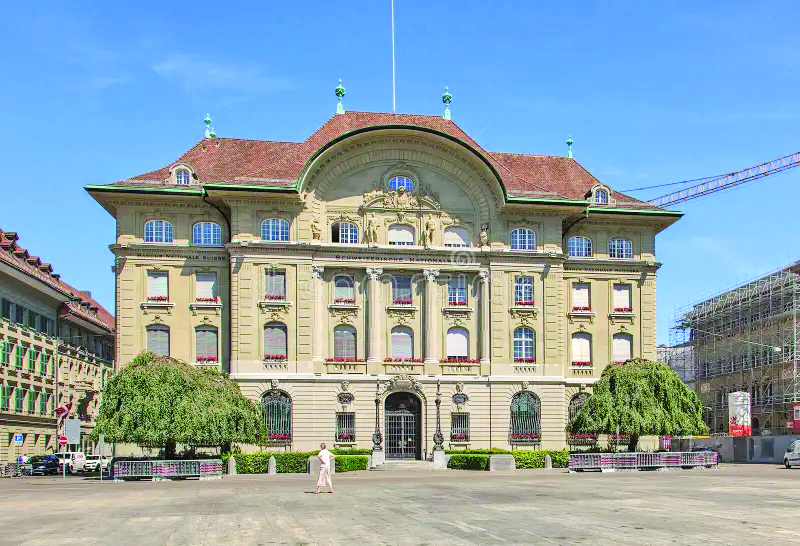
The Fortress of Finance
Decoding the Swiss Banking Paradox in Modern Global Economy
PHOTO: Courtesy
Moshe Srabon
Related News



Latest News




Most Read





Download Photo Card

15 September 2026
The Fortress of Finance