
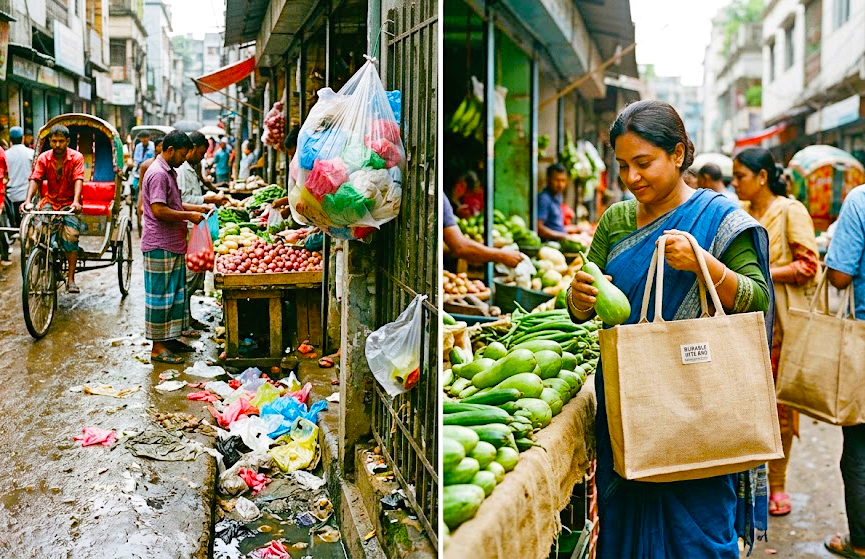
Walk into any kitchen in Bangladesh, and you will likely find a familiar sight: a larger polythene bag stuffed to capacity with dozens of smaller, flimsy plastic bags. Every daily errand—from buying half a kilogram of onions at the katcha bazar to picking up medicine—results in another thin polythene bag coming home. Most of these bags serve a purpose for less than twenty minutes before being tossed into the trash, entering a centuries-long lifecycle of environmental degradation.
While Bangladesh was a global pioneer in legal bans on thin polythene shopping bags, enforcement alone has proven insufficient. The core of the problem is habit: we rely on unnecessary polythene because we do not carry a reusable alternative.
A simple shift—carrying a durable, reusable bag wherever we go—holds immense potential to transform Bangladesh’s urban landscape and environmental future. Discarded plastic bags creating urban pollution.
1. Unraveling the Convenience Trap
Polythene usage in Bangladesh thrives on low-cost convenience. Vendors offer free bags with every transaction, and buyers expect them as standard practice. Consequently, millions of single-use bags are distributed daily across city centers and rural markets alike.
Because they are lightweight and fragile, these thin bags cannot be easily recycled or repurposed. Once discarded, they break down into harmful microplastics, pollute soil, and endanger livestock and aquatic life.
2. The Ripple Effect on Drainage and Urban Flooding
The impact of single-use polythene is acutely visible in major urban areas like Dhaka, Chittagong, and Sylhet. During the monsoon season, brief downpours routinely flood city streets.
The primary cause behind this artificial waterlogging is urban drainage clogged by discarded plastic. Millions of thin polythene bags accumulate in sewage pipes, canals, and riverbeds, choking water flow. By cutting off single-use bags at the source, a single reusable bag actively prevents municipal drainage blockages.
3. The Power of a Sustainable Bag
Carrying an eco-friendly bag made of jute, heavy canvas, or durable cloth shifts the dynamic of daily commerce.Reusable jute bags offer a sustainable alternative.
The Impact of One Reusable Bag
Volume Reduction: A single sturdy jute or cotton bag can replace 300 to 500 single-use polythene bags each year per person.
Revitalizing Indigenous Heritage: Bangladesh possesses rich natural fiber resources, notably jute—the “Golden Fiber.” Normalizing jute and cloth bags directly supports local farmers, artisans, and sustainable industries.
Structural Reliability: Unlike thin plastic that tears easily under weight or punctures from sharp produce, canvas and jute bags securely carry heavy loads without spilling.
4. Turning Conscious Habit into
Cultural Shift
Legislative bans set the standard, but individual habits create lasting momentum. Shifting public mindset requires making bag preparation as routine as carrying a phone or wallet.
By replacing mindless convenience with a conscious carry, we reduce urban waste, protect natural drainage systems, and foster a cleaner ecosystem for future generations.