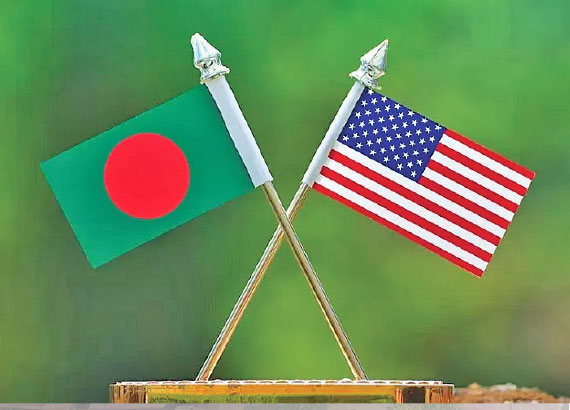
Diplomatic relations between Bangladesh and the United States have entered a new dimension. Over the past few decades, economic and diplomatic transactions between the two nations were primarily confined to ready-made garment exports and specific development assistance. Following recent high-level delegation talks and a bilateral trade dialogue, Dhaka and Washington have agreed to further solidify their economic partnership.
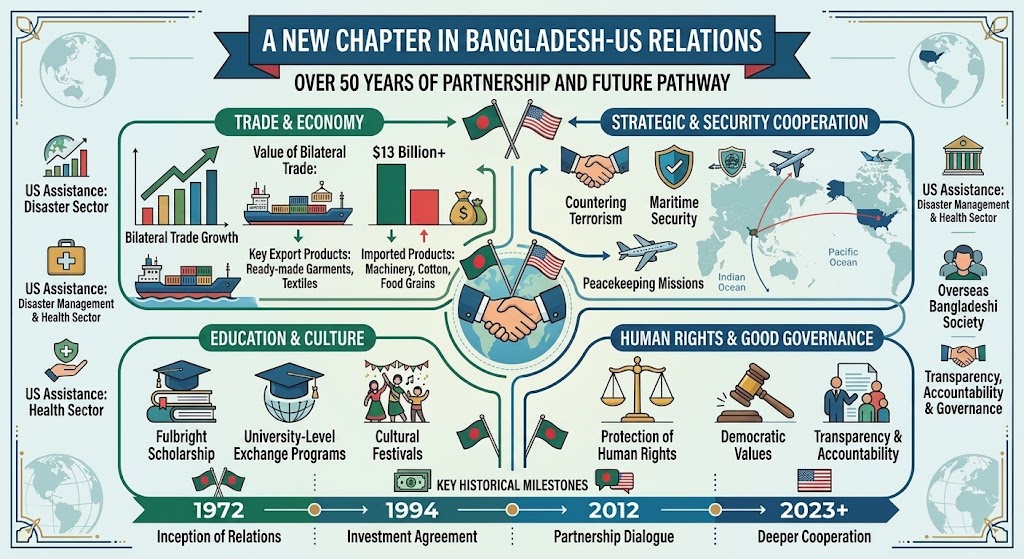
According to reliable sources within the Ministry of Commerce, positive headway has been made regarding duty-free access for Bangladeshi apparel products in the United States, alongside reciprocal tariff concessions on specific raw material imports. Simultaneously, joint bilateral co-operation in overall Indo-Pacific security and maritime protection has strengthened compared to previous years. American investors are now actively casting their eye towards Bangladesh’s information technology, renewable energy, and infrastructure development sectors. In a joint press conference, the US Ambassador stationed in Dhaka and representatives from the Ministry of Foreign Affairs stated that the more than 50-year relationship between Bangladesh and the United States is no longer restricted to mere diplomatic exchanges; it is now directly contributing to the standard of living of ordinary citizens and fostering broader economic growth.
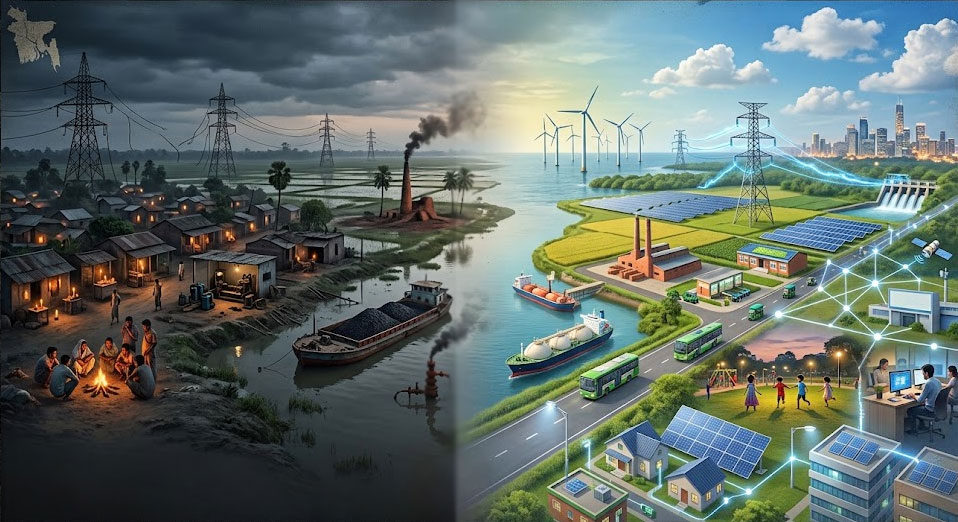
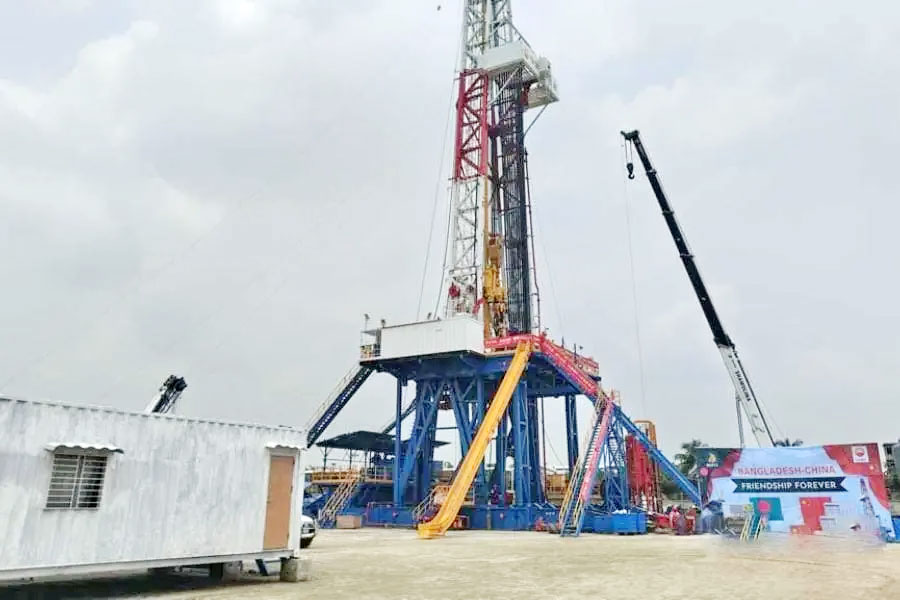
Economic analysts note that Bangladesh has long held a dominant single-market position in the US ready-made garment sector. However, recent bilateral trade discussions focused on reducing the trade deficit while granting special priority to cotton and wheat imports from the US. Discussions on duty re-evaluations for apparel manufactured using American raw materials send a highly encouraging signal for future bilateral relations. On the other hand, American Foreign Direct Investment (FDI)—which historically focused on oil and gas—is now increasingly pivoting towards emerging sectors such as technology, data centres, and solar power.
According to diplomatic sources, Washington views Bangladesh as a crucial partner in the Bay of Bengal region under the Indo-Pacific Strategy (IPS), going far beyond just trade. Joint operations between the military and civil agencies of both nations are being reinforced to enhance maritime defence capabilities, prevent human trafficking, and tackle natural disasters. Furthermore, the US Agency for International Development (USAID) has announced a major new fund to support infrastructure in Bangladesh, a country vulnerable to climate change.
American tech giants are also showing keen interest in capitalising on Bangladesh’s vast youth demographic and emerging digital economy. Additionally, institutional ties between the University of Dhaka and American universities are being further strengthened through joint educational exchange schemes and scholarship programmes.
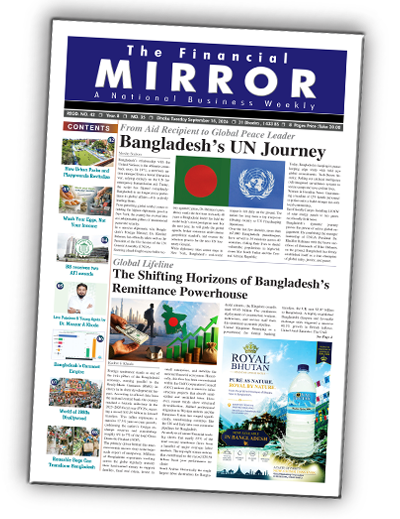
Diplomatic experts in Dhaka maintain that owing to its strategic geographical location and sustained economic growth, Bangladesh is no longer viewed in US foreign policy as merely an aid-recipient nation, but rather as an effective strategic partner. This balanced bilateral journey is expected to yield positive outcomes for both countries' economies and geopolitics in the years ahead.